Slab Leak Detection in Lakewood, NJ
When plumbing lines fail beneath the concrete foundation of your home, finding the exact location of the break is essential. In older communities or slab-on-grade homes across Ocean County, underground pipes are highly susceptible to wear. Proper slab leak detection Lakewood NJ services allow you to find the problem accurately without randomly breaking up your floors.
Many homes were built with copper water lines routed directly beneath or within the concrete slab. Over years of use, aging, soil movement, or abrasion where the pipe rubs against the concrete or gravel can wear down the metal, eventually resulting in a pinhole leak. Because the pipe is buried, you cannot see the water escaping until it travels up through the concrete or outward toward your foundation.
Call (201) 510-1615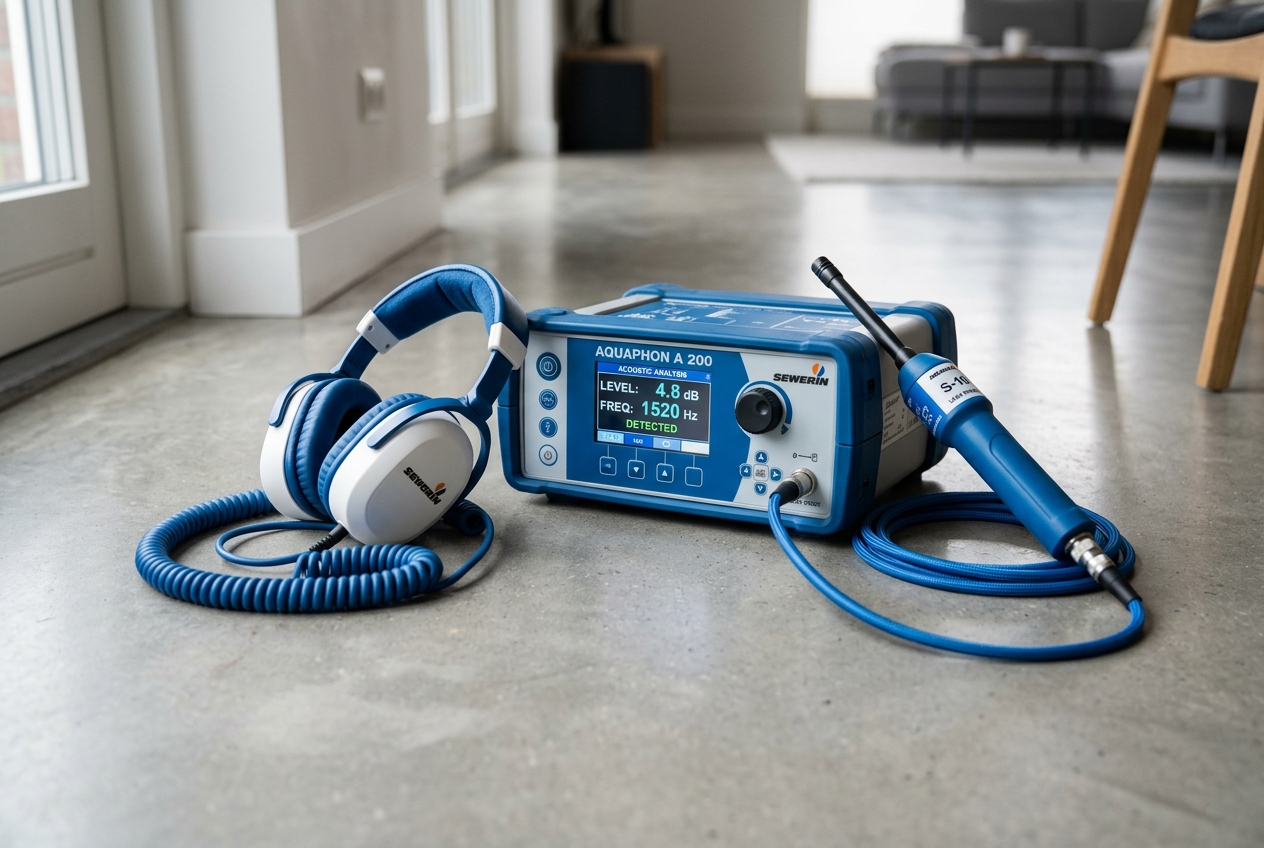
Recognizing a Plumbing Issue Under Concrete
Because these issues are entirely concealed, homeowners often rely on secondary signs to realize they have a problem. A hot water line leak frequently creates a distinct warm floor spot that you may notice while walking barefoot. In other cases, the escaping moisture might manifest as damp carpet, unexplained cracked tile, or warped hardwood flooring.
Another classic indicator is hearing unexplained running-water sounds when all fixtures inside the house are completely turned off. If your water meter is spinning continuously, you might be losing thousands of gallons of water directly beneath your living space. Fast hidden water leak locating can prevent this moisture from migrating upward and ruining your interior finishes.
How Pinpointing Works
The days of jackhammering multiple holes in a living room floor to search for a wet pipe are gone. Today, we utilize highly sensitive acoustic detection and electronic locating equipment. Acoustic listening devices allow a specialist to hear the precise frequency of water escaping from a pressurized pipe beneath inches of concrete. Electronic line tracing helps map the exact path of the metallic pipes across your floor plan.
By combining these technologies, we can pinpoint the leak's origin within a very small radius. This non-invasive approach protects your property from unnecessary destruction. We clearly separate the process of identifying a slab leak from the actual repair, ensuring you have accurate, unbiased diagnostic information before you commit to opening the floor.
Detection vs. Repair
It is important to understand the difference between locating the problem and fixing it. Once the source is marked, you will need to consider how to address it. Your pipe leak repair options generally fall into three categories. The first is a spot repair, which involves breaking a small, targeted section of concrete exactly where the leak was marked to replace the broken section of pipe. However, if the underground copper is severely deteriorated, a single spot repair may just be a temporary fix before another weak point fails.
Alternatively, the line can be abandoned in place and bypassed through a process called rerouting. This involves running a new line through the walls or ceiling, completely avoiding the need to break the slab. Finally, full repiping involves replacing the entire aging system. We do not guarantee that any particular repair method will be required until the exact nature and location of the problem are established.
Frequently Asked Questions
What causes a slab leak?
Slab leaks are often caused by the aging of copper lines beneath the concrete, soil movement, or abrasion against the concrete over time.
Can a slab leak be located without breaking concrete?
Yes. Advanced acoustic and electronic locating equipment allows specialists to pinpoint the source of the moisture accurately from above the slab without unnecessary demolition.
What are signs of a slab leak?
Common signs include warm spots on the floor, unexplained cracked tile, damp carpet, or the sound of running water when all fixtures are turned off.
What happens after the leak is located?
Once pinpointed, we will discuss the situation with you. You will then have the information needed to explore your options, which generally include spot repair by breaking a small section of concrete, rerouting the pipe, or repiping the affected line.
We provide accurate diagnostics across our local service areas, ensuring you have the data you need to protect your property.